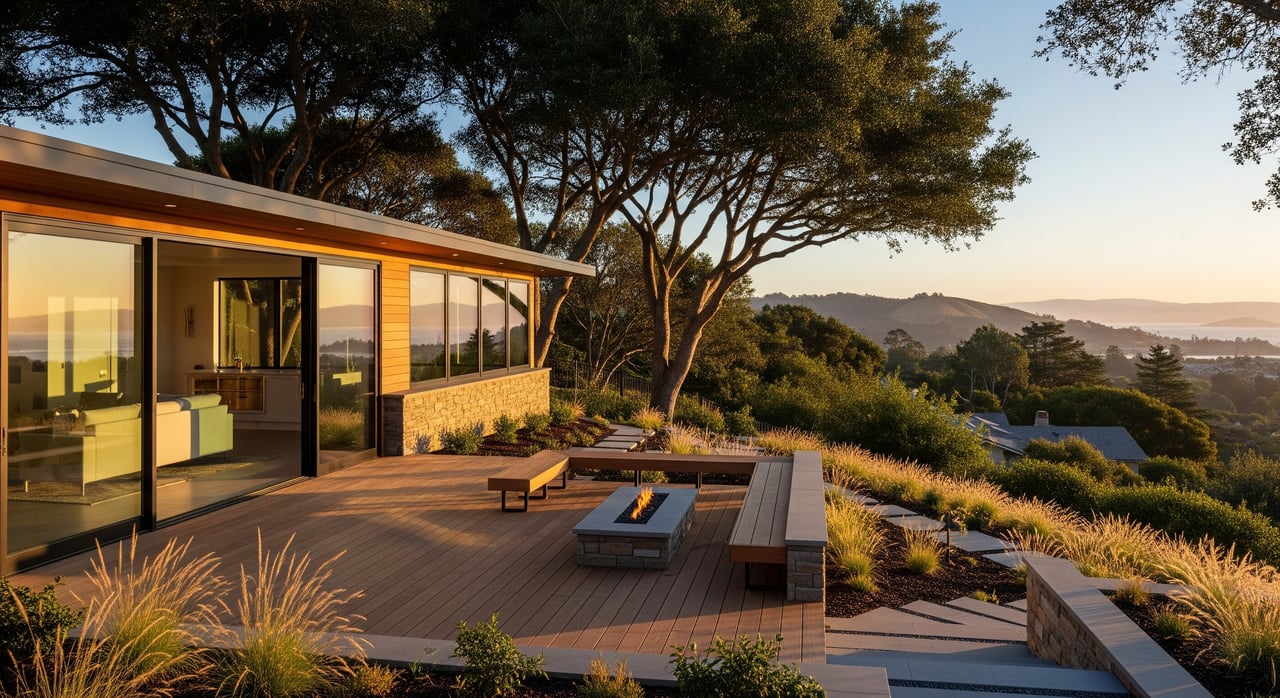
Is your Montclair hillside home getting the attention it deserves from today’s buyers? In the Oakland hills, the details that matter most are specific to sun, slope, and lifestyle. If you understand what buyers value, you can present your property with confidence and make targeted updates that pay off.
This guide breaks down the six features Montclair buyers prioritize, the hillside-specific issues they evaluate, and the practical steps you can take to prepare. You’ll come away with a clear checklist for inspections, smart upgrades, and ways to showcase your home’s strengths. Let’s dive in.
Sun exposure and natural light
How orientation shapes daily comfort
In Montclair’s microclimate, light and warmth change with orientation. South-facing windows usually deliver the most consistent light in winter and throughout the year. West-facing rooms capture dramatic afternoon light and sunsets but can run warmer in summer. East-facing spaces feel bright in the morning and stay cooler later in the day. North-facing rooms get soft, even light that works well for studios or offices.
Mature trees and ridge lines can shade interiors, especially on lower levels. Terraced lots and higher elevations often give upper floors and roofs more direct sun, which also helps if you plan for solar-ready improvements.
How to highlight light when selling
- Note which rooms get morning and afternoon sun.
- If you have good solar access, mention roof orientation and any tree trimming or vegetation management that improved daylight.
- Stage work areas and reading nooks in naturally bright spots to make the benefit obvious during showings.
Indoor–outdoor flow
What buyers look for on a slope
Montclair buyers prize easy transitions to decks, patios, and tiered gardens for relaxing and entertaining. Popular hillside solutions include multi-level decks, stair-linked terraces, and mid-level patios off the living room or kitchen. Large sliding or folding doors help bring the outdoors in.
Drainage and maintenance basics
On slopes, water management is critical. Decks over steep grades need proper permits and regular inspections of structural connections. Make sure drainage at transitions is solid so water moves away from the house. If you have recent deck improvements, composite decking, or new railings, call them out.
Parking and access
Driveways, garages, and guests
Steep streets and limited on-street parking near Montclair Village make off-street parking a premium. Common layouts include garages tucked under the house, tandem setups, steep driveways, switchbacks, or engineered parking pads. Some homes have street-level parking with the residence above, which adds stairs or internal elevators and stairways.
Simple fixes before listing
- Repair or resurface worn driveways where feasible.
- Improve lighting and handrails on steep approaches.
- Provide clear instructions for guest parking and delivery access during showings.
Home office and flexible spaces
Work-from-home essentials
Remote and hybrid work remain common. Buyers want a quiet room with a door, good daylight, and enough wall space for storage or a clean video backdrop. Strong connectivity matters. In larger hillside homes, Wi‑Fi coverage can be uneven, so wired Ethernet drops or mesh systems add value.
Easy upgrades that show well
- Convert a spare bedroom or bonus room into a defined office with lighting and shelving.
- Add Ethernet ports or improve network coverage.
- Stage the space to feel focused and private.
EV readiness and electrical capacity
What signals “charger-ready”
EV adoption is high across the Bay Area, so Level 2 charging is a common expectation. Buyers look for a dedicated 240V outlet, room on the electrical panel for a new circuit, and a garage or parking spot near the panel or meter. Panel capacity matters. A 200A service typically gives more flexibility than a 100A panel for chargers and future upgrades.
Disclosure and prep that remove friction
- Note your panel size and any available breaker space.
- If feasible, preinstall a 240V outlet or a hardwired charger near parking.
- Show the proximity of the panel to the parking location to indicate an easier install path.
View orientation and privacy
Bay, ridge, and hillside outlooks
Views are a signature advantage in the Oakland hills. West and southwest orientations often capture sunsets and Bay outlooks. Higher-elevation lots usually have broader vistas, though trees can affect views seasonally. Privacy also matters. Homes perched above neighbors can feel exposed on decks, so thoughtful screening and landscaping help.
Keeping views clear and private
- Maintain trees and plantings to preserve view corridors where allowed.
- Use landscaping to increase privacy without sacrificing light.
- Understand that nearby redevelopment can change view lines. Public city permit filings can offer clues about future changes.
Hillside risks buyers weigh
Slope stability and soils
Buyers look for solid retaining walls and signs of stability. Visible cracks, settlement, or past movement trigger deeper review. Many buyers add a geotechnical report as a contingency for steeper lots or if there are visible concerns.
Drainage and water management
Surface runoff can concentrate at property edges. Clogged drains and improper grading may push water toward lower levels. Keep gutters and downspouts clear and route water away from the foundation. Ask inspectors to comment on any slope-related drainage needs.
Seismic vulnerability and retrofits
Older hillside homes may lack modern seismic connections. Buyers appreciate documented retrofits such as foundation bolting or cripple wall bracing. If you have reports or permits, make them easy to review. If not, consider a structural evaluation so buyers understand the current condition.
Wildfire and defensible space
Montclair sits in a Wildland–Urban Interface setting where ember exposure and brush fires are a concern. Buyers pay attention to defensible space, fire-resistant roofing and vents, and driveway access for emergency vehicles. Wildfire exposure can affect insurance availability and premiums, so it helps buyers to start insurance inquiries early.
Permitting, grading, and improvements
Decks, retaining walls, grading, and additions typically require permits and inspections. Records for past work reduce friction in escrow and can help with financing. Grading and cut or fill work often requires geotechnical input and added approvals.
Access and emergency response
Steep, narrow streets can limit large-vehicle access. Buyers will test how moving trucks, contractors, and emergency vehicles access the property. Clear, visible address signage and unobstructed approaches matter.
Buyer inspection checklist
- Structural: foundation condition, cracks or settlement, and all retaining walls.
- Geotechnical: consider an engineer’s review for steep lots or visible instability.
- Drainage: grading slopes away from the home, clean gutters and downspouts, working French drains.
- Roof and exterior: roof age and condition, flashing, and eave protection.
- Decks and stairs: ledger flashing, structural connections, railings, and permit status.
- Utilities: electrical panel capacity, presence of a 240V outlet or conduit for an EV charger, and plumbing on lower levels.
- Fire safety: defensible space, roof and vents, and clear address signage for responders.
Cost‑effective seller upgrades
- Install or document EV charging readiness with a 240V outlet or panel capacity.
- Refresh outdoor living: repair decks, level patio areas, and consider durable composite decking.
- Create defensible space and keep documentation for compliance.
- Address small drainage fixes: extend downspouts, regrade near foundations, and clear gutters.
- Define a quiet office with lighting and wired connectivity.
- Organize permits, warranties, and reports for hillside work such as retaining walls, reroofs, and deck replacements.
When to bring in specialists
For complex sites or older structures, bring in licensed professionals who know East Bay hillside conditions. Geotechnical engineers, structural engineers, and home inspectors experienced with hillside properties provide clarity and can save time in escrow. City planning and building departments, local fire agencies, and utility programs also publish guidance on permits, defensible space, seismic information, and EV readiness.
Ready to position your Montclair home to win?
Montclair buyers value sun, views, and usable outdoor living, along with clear solutions for parking and EV charging, dependable drainage, documented slope stability, wildfire readiness, and modern work-from-home capability. With the right preparation and transparent documentation, you can reduce perceived risk and highlight what makes your hillside home stand out.
If you are planning to buy or sell in Montclair or nearby East Bay neighborhoods, connect for a confidential, data-informed strategy that reflects today’s buyer priorities. Reach out to Ann Newton Cane to get started.
FAQs
How does hillside orientation affect comfort and energy use?
- Orientation influences sunlight and temperature. South-facing areas get steady light, west-facing rooms offer afternoon sun and sunsets but can run warmer, and east-facing spaces stay cooler later in the day. Trees and roof pitch also affect solar potential.
Do sellers have to disclose hillside issues in Montclair?
- Yes. You must disclose known material facts such as slope movement, past landslides, or structural repairs. Clear documentation builds trust and reduces surprises in escrow.
Will a Montclair hillside property be harder to sell?
- Views and outdoor living are strong draws, but access, drainage, and slope stability can narrow the buyer pool. Maintenance records, permits, and targeted improvements typically help sales move faster.
How important is EV readiness to Oakland hills buyers?
- Very important. A 240V outlet or an easy path to install a charger removes a common buyer concern and can speed decisions.
What extra inspections should I add for a hillside home?
- In addition to a standard home inspection, consider a geotechnical engineer for steep lots, a structural review if there are cracks or settling, and explicit checks of retaining walls and drainage.
Are there local programs for EV chargers or solar?
- Yes. Utility and state programs frequently offer incentives and time-of-use rates. Program specifics change, so check current offerings when you plan your installation.