Curious why one Moraga home sparks multiple offers while another with similar square footage sits longer? In this market, the answer often has less to do with a simple label like ranch, remodel, or new build, and more to do with how the home lives day to day. If you are buying or selling in Moraga, it helps to understand how the town’s housing history, lot patterns, and current demand shape value. Let’s take a closer look.
Moraga’s Housing Story
Moraga’s housing stock is shaped by a major building wave from the 1960s and 1970s. Town history indicates that about 70% of the current housing base was built during those decades, and most homes predate Moraga’s 1974 incorporation.
That history still matters today. Moraga remains dominated by single-family detached housing, with a median single-family lot size of about 14,860 square feet. Lot sizes vary by area, with smaller lots in Larch and Moraga Country Club and larger lots in Sanders Ranch and The Bluffs.
The town’s housing element also shows why Moraga appeals to buyers who want space. Most homes are larger than 2,000 square feet, 52% have four or more bedrooms, and many lots include off-street parking and relatively flat backyards. The town specifically notes that this housing stock is well suited to ADUs and Junior ADUs.
Why Ranch Homes Still Matter
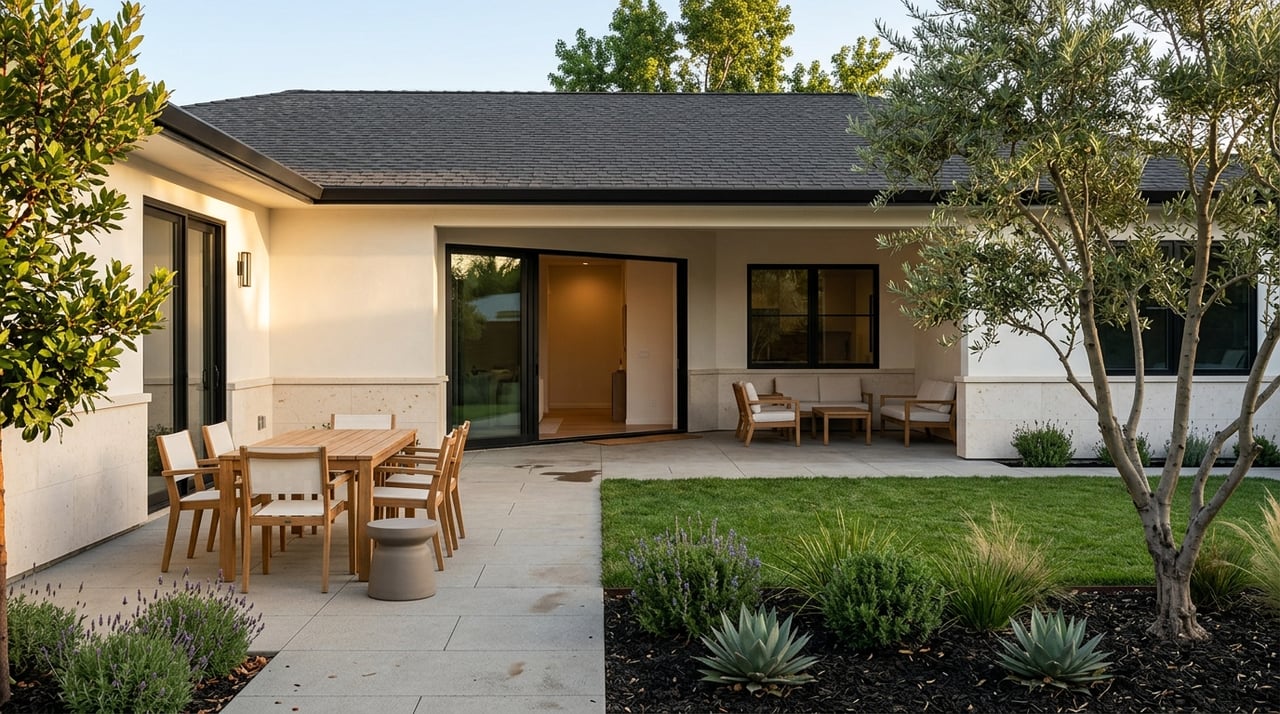
Ranch homes are not a niche product in Moraga. They fit the town’s established pattern of low-profile homes on generous lots, and ranch-style influences are part of Moraga’s broader architectural identity.
That helps explain why these homes still draw attention. Redfin’s winter 2025 feature analysis found that one-story homes were among the features associated with a 99.0% sale-to-list ratio in Moraga.
For many buyers, the appeal is practical. A one-story layout can feel easier to use, and an older ranch often offers a strong connection between indoor living and the yard. In Moraga, that combination lines up well with what the market appears to reward.
What Adds Value in Updated Homes
Updated homes often compete well because they keep the advantages buyers already want in Moraga while improving daily function. An established lot, a familiar neighborhood setting, and usable outdoor space can become even more compelling when kitchens, baths, and circulation have been modernized.
Feature-level market data supports that idea. Redfin’s Moraga feature analysis ranked decks, backyards, landscaping, and attached garages among the valuable features, alongside one-story layouts.
That does not mean every remodel performs the same way. In Moraga, updates tend to matter most when they improve how the home lives, not just how it photographs. Buyers often respond to better flow, easier outdoor access, and improvements that feel complete and well documented.
Where New Construction Fits
New construction in Moraga is limited. Instead of large, widespread subdivision growth, newer homes are typically tied to infill or planned-development sites.
The town’s active pipeline includes a 33-home single-family proposal on Moraga Way, a 49-unit townhouse project on School Street, and a 71-lot clustered single-family proposal in Indian Valley. Moraga also states that it needs capacity for at least 1,118 new units by 2031.
Even so, newer housing in Moraga may not feel dramatically disconnected from the town’s older homes. Moraga Center design guidelines encourage Spanish Colonial and Ranch-style interpretations, so new product often still presents a traditional character, even when the homes are more compact or more vertical.
Ranch vs New Build in Moraga
If you are comparing a classic ranch home with a newer build, the better value is not always the newer property. In Moraga, buyers often weigh layout, lot utility, and outdoor usability just as heavily as age.
A ranch home may offer a wider lot, flatter backyard, and a more straightforward one-story plan. A new build may offer newer systems, a more current finish level, and lower immediate update needs. The real question is which home delivers the best fit for your priorities and the strongest day-to-day livability.
Here is a simple way to think about the tradeoffs:
| Home Type | Typical Strengths | Common Value Drivers |
|---|---|---|
| Older ranch home | One-story living, established lots, traditional Moraga character | Yard function, layout, outdoor connection, presentation |
| Updated remodel | Combines lot and location advantages with modern living | Quality of improvements, flow, documentation, finish level |
| New construction | Newer systems and finishes, often lower short-term maintenance needs | Efficient design, condition, location, overall usability |
What the Market Is Saying Now
Recent market trackers point in the same general direction: Moraga remains competitive. Redfin reported a May 2026 median sale price of $1,576,557, down 14.4% year over year, with 14 median days on market, a 101.4% sale-to-list ratio, and 43.8% of homes selling above list price.
Realtor.com’s June 2026 tracker also described Moraga as a seller’s market, with about 58 active listings and a median listing price of around $1.65 million. These metrics are not identical, but together they suggest that demand remains strong for well-positioned homes.
For sellers, this means preparation still matters. For buyers, it means you should look beyond broad pricing headlines and pay close attention to condition, functionality, and how a home compares within its immediate category.
Why Livability Often Leads Pricing
One of the clearest takeaways in Moraga is that pricing often follows livability. Condition, floor plan, and outdoor usability can matter more than whether a home is simply called a ranch, a remodel, or a new build.
That makes sense when you consider the local housing stock. Many homes already offer substantial square footage, larger bedroom counts, parking, and backyards with useful potential. In that context, buyers may place a premium on how well a home uses those advantages.
A house that feels easy to live in can outperform a house that is technically larger or newer. In Moraga, function and presentation often work together to create value.
Buyer Diligence Matters in Moraga
If you are buying an older Moraga home, diligence is especially important. Because many homes were built before 1974, permit history and plan availability can require closer review.
The town notes that older plans may be missing because Contra Costa County did not microfiche house plans until the mid-1980s. The town also requires approval for many exterior changes, and homes in Moraga Country Club and Sanders Ranch require HOA approval for single-family properties.
For that reason, documented improvements often carry more weight than hypothetical future upside. A home with finished, approved work may feel more straightforward than one with visible potential but less clarity on records or approvals.
What Sellers Should Know
If you are preparing to sell in Moraga, your home type is only part of the story. Buyers are often looking closely at usability, outdoor connection, and whether the home feels ready for modern living.
That means sellers should pay attention to the features that align with current demand, including:
- One-story functionality where applicable
- Clear indoor-outdoor flow
- Well-presented backyards and decks
- Strong landscaping and curb appeal
- Attached garage utility
- Thoughtful, documented improvements
In a competitive market, strong preparation can help buyers understand not just what your home is, but why it stands out.
What Buyers Should Focus On
If you are shopping in Moraga, it helps to evaluate each home through a practical lens. Instead of asking only whether a property is older or newer, ask how well it supports the way you want to live.
Some helpful questions include:
- Is the floor plan easy to use?
- Does the yard feel functional for your needs?
- Are key updates already completed?
- Is there documentation for major improvements?
- Will approvals matter for future exterior changes?
- Does the home’s value reflect condition as well as size?
These questions can help you compare homes more clearly, especially when choices span ranch-era originals, polished remodels, and limited new construction.
If you are weighing a move in Moraga and want a clear read on how your home type fits today’s market, Ann Newton Cane offers thoughtful, data-informed guidance for buyers and sellers who want a strategic, high-touch approach.
FAQs
How common are older homes in Moraga?
- Older homes are very common in Moraga. Town history says about 70% of the housing stock was built in the 1960s and 1970s, and most homes predate incorporation in 1974.
How does new construction compare with older homes in Moraga?
- New construction is limited in Moraga and is usually found in infill or planned-development sites rather than large new subdivisions. Older homes often compete well because of lot size, layout, and outdoor usability.
What home features appear to add value in Moraga?
- Recent Moraga feature analysis highlighted one-story homes, attached garages, decks, backyards, and landscaping as features associated with strong market performance.
What should buyers check when purchasing an older Moraga home?
- Buyers should review permit history, available plans, and approval requirements for exterior changes. This can be especially important because older house plans may be missing and some properties may also require HOA approval.
Why do updated ranch homes stay competitive in Moraga?
- Updated ranch homes often combine established lots and practical one-story living with modern improvements. In Moraga, that mix can align well with buyer demand for usability, outdoor connection, and move-in-ready condition.