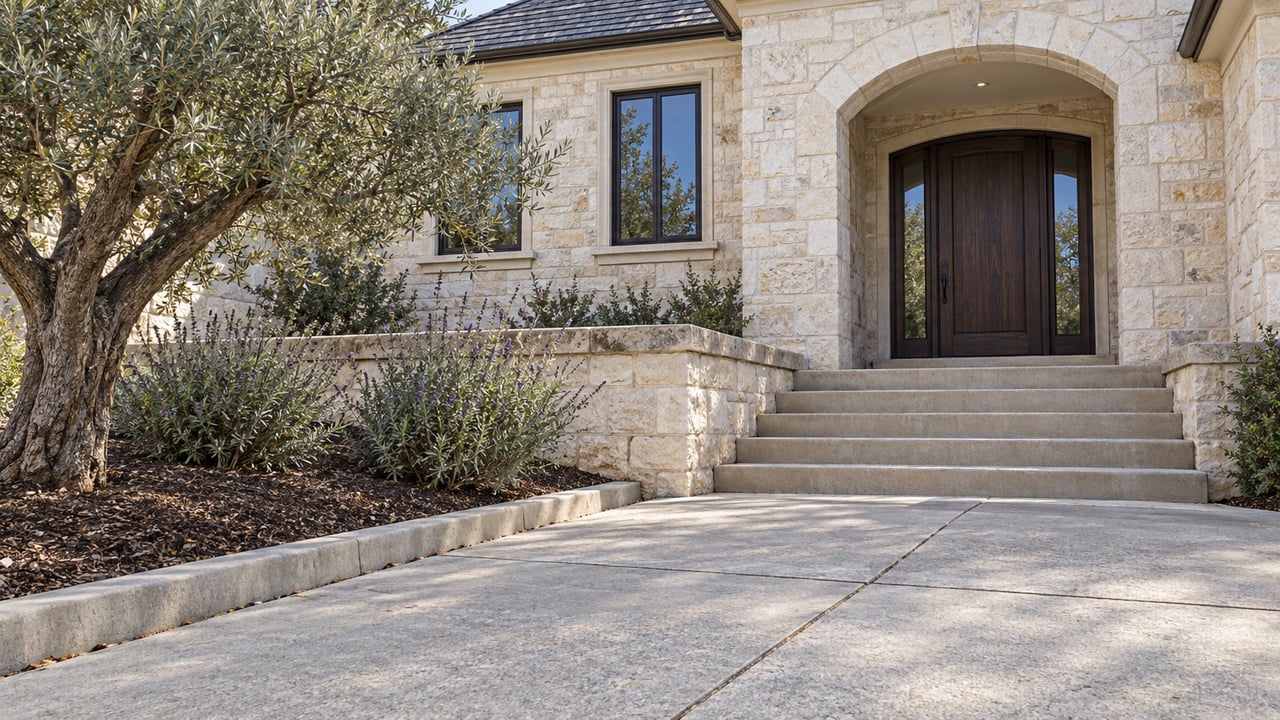
Alameda County single-family homes sold in a median of 13 days in September 2026, according to the California Association of REALTORS. Getting a sewer lateral repaired and certified in Oakland runs on a different schedule. You hire a licensed contractor, get a City of Oakland Sewer Lateral Permit and book a city inspection at least 48 hours ahead. Then you schedule a pressure test with an East Bay Municipal Utility District inspector watching. That sequence rarely fits inside a two-week listing period. For an Upper Rockridge seller, the lateral question gets answered either at the pricing table, weeks before photos, or it moves to the buyer at the offer table, along with a deposit and a deadline.
The rule that sits under an Oakland closing
Oakland is part of EBMUD's regional Private Sewer Lateral program, which covers properties inside EBMUD's wastewater service area. Berkeley runs its own program. The trigger for a sale is written into Section 6(b) of the Regional Private Sewer Lateral Ordinance:
"Before completing a Title Transfer associated with a parcel containing any Structure, either the transferor or the transferee, as negotiated between them, shall obtain a Compliance Certificate under Section 7, unless a Time Extension Certificate is obtained as provided in Section 9."
Three details in that rule shape the deal. First, the ordinance leaves it to buyer and seller to decide who does the work. Second, a camera inspection alone does not earn the certificate. EBMUD requires an air or water pressure verification test that its own inspector witnesses. Third, the City of Oakland makes the owner responsible for the whole lateral, from the building all the way to the public main, including the lower section under the sidewalk and street.
The ordinance also says the requirement "in no way affects the legality of the transfer of title." So the sale can still close. Closing without a certificate or an extension is a violation of the ordinance, though, and once title transfers, the new owner alone is responsible for getting compliant. That shift of responsibility is what the negotiation turns on.
Three ways a lateral leaves escrow
For a parcel the program covers, the sale resolves the lateral in one of these ways:
- The seller certifies before listing. A contractor checks the line, any repairs go through an Oakland permit, and an EBMUD inspector witnesses the test. A replaced lateral earns a 20-year certificate. A lateral that passes after repair, or without any work, earns 7 years.
- A valid certificate is already on file from an earlier sale, a large remodel or a voluntary test. More on this path below.
- Either party files a Time Extension Certificate. The fee is $142. The signed certificate and a $4,500 check payable to EBMUD-PSL go in at title transfer, and the work has to be finished within 180 days of the certificate's issue date.
In a fast market, the third path is where leverage moves. EBMUD's extension guidelines say the Time Extension Certificate has to name who receives the $4,500 refund once compliance is reached. Refunds usually arrive 4 to 6 weeks after the Compliance Certificate is issued, and only after any outstanding inspection fees are paid. If the 180 days run out, the deposit may be forfeited and the new owner faces EBMUD enforcement.
That means the extension carries two separate items that can be negotiated. One is who puts up the deposit and gets it back. The other is who carries the risk of a repair whose final cost won't be known until a contractor digs. A seller who picks the extension path in a 13-day market is handing the buyer an open-ended repair, and the buyer will price that into the offer.
The fee schedule is the small number
EBMUD's fees for its fiscal year 2027 took effect July 1, 2026, and they appear in the district's published rate document.
EBMUD PSL fee, effective July 1, 2026 | Amount |
|---|---|
Compliance Certificate | $407 |
Time Extension Certificate | $142 |
Extra lateral or additional verification test, per lateral | $140 |
Rescheduling | $140 |
Off-hours verification, 1.5 hours onsite | $289 |
Specific appointment time, 1.5 hours onsite | $374 |
HOA / greater than 1,000 feet oversight | $566 |
None of these fees moves the deal. The contractor bid does. It quotes $15,000 to $35,000 when the job includes the street section, and $25,000 to $80,000 for complex jobs with several failure points or reconstruction on the main side. The contractor presents these as market examples, not official averages. The same contractor names Rockridge as an area where ground settling around trees can pull clay pipe joints apart in the parkway strip.
EBMUD's bid guidance for homeowners explains why bids spread so widely. It lists the factors that drive a bid: pipe length, where the public main sits, the work method, pipe material, and landscaping in the way. A main in the street can mean excavation and repaving. EBMUD also notes that many older East Bay homes still have their original clay laterals, which can crack, separate at the joints and let roots in. On the city side, Oakland's inspector checks pipe material and connections and may ask for compaction test results before signing off.
The fees are fixed and small. The repair could be several thousand dollars or a five-figure job. A buyer who agrees to the extension path has to price that whole range.
Hillside lots put more pipe in the count
On a flat lot, a lateral usually runs straight from the house to a main under the street. Hillside parcels can be laid out differently, and the ordinance's definition of "Upper Sewer Lateral" covers those layouts. If a lateral connects to a sewer main in a rear or side yard easement, or to a manhole, "the entire Private Sewer Lateral, including the connection to the Sewer Main or manhole, is an Upper Sewer Lateral." The same definition says a lateral is associated with a parcel if any part of it sits on the parcel or carries waste from a structure on it. It also says a single parcel can have more than one Upper Sewer Lateral.
That definition raises the stakes. Section 7(a) issues the certificate only when "all Private Sewer Laterals associated with the parcel" pass. A second line, whether it serves a secondary structure or runs through an easement downslope, means another test, a $140 fee for each extra lateral, and one more pipe that has to hold pressure.
Shared laterals add their own question. EBMUD's guidance tells owners to ask the city whether a shared lateral is allowed. If it is, each owner is responsible for the line from their building's foundation to the public main. If the city does not allow it, the lines have to be separated before EBMUD will inspect. A buyer who finds out mid-escrow that a line is shared has found a separation job, not a simple pressure test. For parcels or groups of parcels whose laterals total more than 1,000 feet combined, Section 12 adds a Condition Assessment Plan along with EBMUD oversight.
A certificate already on file can take the test off the table
The fastest path is the one sellers check least. Section 7(a) applies its assess, repair and test steps to a property owner "who does not hold a valid Compliance Certificate." Read together with the 7-year and 20-year terms in Section 8, the sale still counts as a triggering event. A valid, unexpired certificate that covers every lateral on the parcel should mean no new test for the rest of its term. Sales are not the only way a certificate gets issued. Any permitted construction or remodel costing more than $100,000 requires one before final sign-off, and so does a change in water meter size. An Upper Rockridge home that went through a major renovation in recent years may already have a certificate without its owner knowing.
Anyone can check. EBMUD's parcel search takes an address and city or a parcel number. It shows compliance status, and certificates can be viewed, printed or downloaded there. EBMUD says the lookup shows whether a certificate is on record and when it expires. Sellers are expected to give the buyer a copy of the certificate before title transfers.
If nothing is on file, the ordinance also lets an owner certify voluntarily, with no sale involved. EBMUD points out that holding a certificate limits the impact of lateral issues at future triggering events, sales included. For an owner thinking about selling in spring, doing this over the winter turns a contingency question into a document already in the disclosure package.
Quick answers
Does Berkeley follow the same rules? Berkeley runs its own sewer lateral program, separate from the EBMUD regional program that covers Oakland.
Who can apply for the Time Extension Certificate? Either party to the sale, or their representatives, can apply. It has to be completed and signed before title transfers.
Does the Oakland permit replace the EBMUD certificate? No. Oakland issues the Sewer Lateral Permit and inspects the work. EBMUD issues the Regional PSL Compliance Certificate.
Should a lateral scope look for anything besides cracks? EBMUD advises that a review of a CCTV inspection should also look for gas line cross bores.
This post is general information, not legal, tax or financial advice. Please confirm the requirements for your property with EBMUD, the City of Oakland and your own advisors.
If you're thinking about selling in Upper Rockridge, the lateral is one of the first things Ann Newton Cane looks at, well before pricing and photography. We'll pull your parcel's certificate status, line up contractor bids if you need them, and help you decide whether to certify before listing. Request a Confidential Home Valuation to start the conversation.