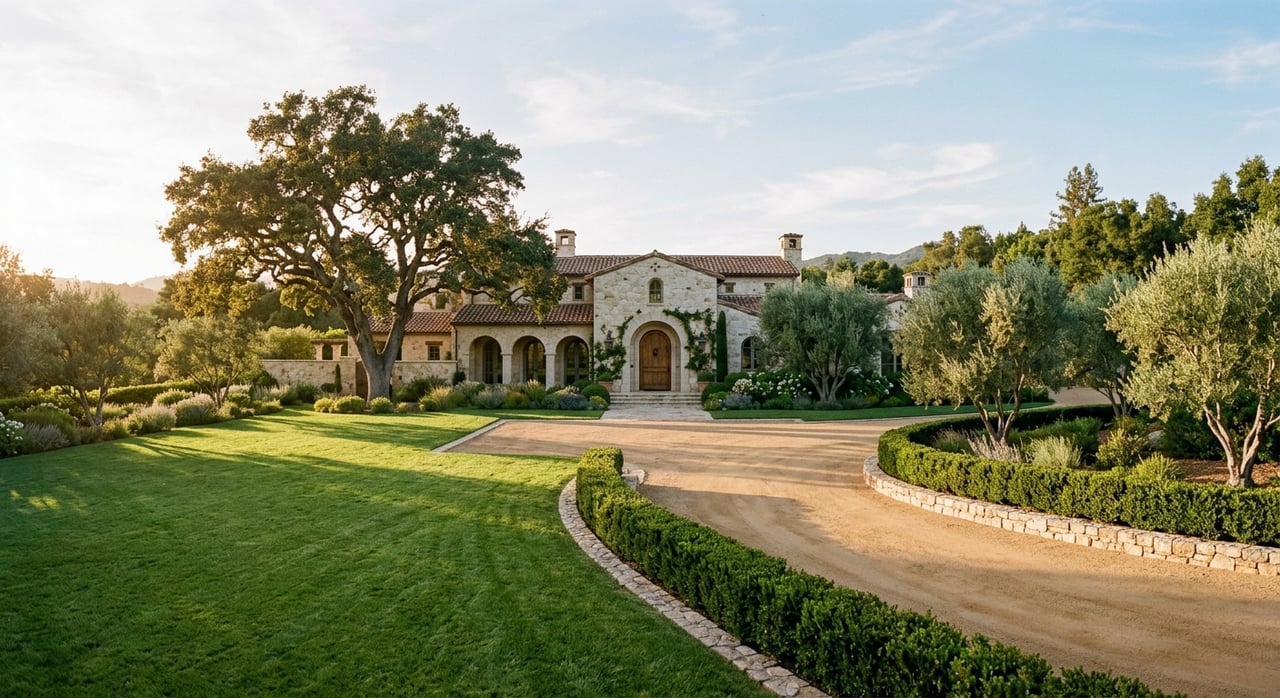
If you are drawn to Alamo estate living, you are probably not just shopping for square footage inside the home. You are looking for space, separation, and a setting that feels calm the moment you turn onto the street or drive. In a market where listings can reach well into the multi-million-dollar range, understanding how lot size and privacy shape value can help you buy or sell more strategically. Let’s dive in.
Why Alamo lot size matters
Alamo is an unincorporated Contra Costa County community, which means county government handles planning and code enforcement. That matters because the county’s broader land-use approach helps preserve the low-density feel that defines much of Alamo. In the countywide unincorporated area, 46% of land is set aside for conservation, recreation, and watershed protection, while 38% is devoted to rural and agricultural uses.
That planning backdrop helps explain why larger parcels remain such an important part of the local housing story. Contra Costa County describes Residential Low Density as detached single-family housing on lots of about 15,000 square feet to 1 acre. Residential Very-Low Density is typically detached single-family housing on lots of 1 acre or larger.
For you as a buyer or seller, that means lot size is not a side detail in Alamo. It is often one of the first things shaping how a property is perceived, how it lives day to day, and how it is valued in the market.
Usable land matters more than raw acreage
A larger lot sounds impressive, but the headline number does not tell the whole story. Contra Costa County notes that zoning standards include lot size, setbacks, parking ratios, and landscaping requirements, and that actual density is reviewed using net acreage instead of just gross parcel size. In practical terms, two parcels with similar acreage can offer very different lifestyles.
One lot may have broad flat yard space for entertaining, recreation, or a future outdoor project. Another may include slope, easements, or a limited building pad that reduces how much of the land feels functional. That is why buyers in Alamo often place more value on usable grounds than on acreage alone.
This is especially important in the upper tier of the market, where expectations tend to center on both beauty and function. Space for a pool, guest structure, detached studio, or generous lawn can shape value in a way that raw land area cannot on its own.
Why privacy creates a premium
Privacy is one of the clearest lifestyle drivers in Alamo, but it is not created by a single feature. It usually comes from a combination of lot depth, setbacks, mature trees, topography, gate placement, and distance from neighboring homes. The more these elements work together, the more secluded a property tends to feel.
County staff reports for Alamo-area development have referenced the area’s continued rural character and the presence of smaller roads and lanes that often lack sidewalks and curbs. That semi-rural setting is part of what many estate buyers find appealing. It can create a sense of retreat while still keeping you connected to the broader East Bay.
Current listings also show how privacy is packaged in the market. Recent examples have included homes on half-acre to nearly one-acre lots with features like private lanes, mature oaks and redwoods, pools, spas, outdoor kitchens, fire pits, and detached studios. At the top end, listings can expand into true estate-scale properties with vineyard elements, cabanas, and resort-style grounds.
Outdoor living adds real value
In Alamo, outdoor living is often central to the ownership experience. A property with strong privacy but limited outdoor usability may still feel incomplete to many buyers. By contrast, a well-planned yard can make the entire home feel larger and more valuable.
That does not always mean the biggest lot wins. It often means the lot offers the right mix of open area, screening, and layout. A smaller parcel with excellent privacy, mature landscaping, and a well-designed pool terrace may compete strongly against a larger parcel with less functional land.
The local setting reinforces that value. The Iron Horse Regional Trail runs through a rural and residential area to downtown Alamo and the Alamo Square shopping center. Mount Diablo State Park and Las Trampas Wilderness Regional Preserve also contribute to the area’s appeal through scenic views, recreation, and a sense of separation from denser urban surroundings.
How location within Alamo changes the feel
Not every part of Alamo offers the same lot character or privacy profile. Market snapshots and listing platforms commonly identify local subareas such as Westside, Roundhill Country Club, Bryan Ranch, Stonegate, White Gate, and Alamo Oaks. That is a useful reminder that estate living can vary meaningfully from one pocket to another.
Some homes may offer a tucked-away setting on a private lane with deep setbacks and substantial tree cover. Others may sit closer to the community’s main commercial corridor, trading a bit of seclusion for quicker access to daily errands and services. Neither is inherently better, but they appeal to different priorities.
Contra Costa County policy for the Alamo-Diablo-Blackhawk area emphasizes the predominantly single-family character of the community and limits larger-scale commercial growth to a defined commercial district. That separation helps preserve the residential estate feel many buyers want, while also creating a real convenience-versus-privacy trade-off.
What buyers should evaluate carefully
If you are buying in Alamo, it helps to look beyond the listing photos and ask more detailed questions about how the land actually works. Two homes can appear similar online but offer very different long-term value once you understand the site.
Focus on these points when comparing estate properties:
- Flat and usable yard area
- Slope and drainage conditions
- Setbacks and spacing from neighboring homes
- Tree cover and visual screening
- Access from the street or private lane
- Existing outdoor amenities such as pools, spas, or detached structures
- Potential feasibility for future additions, subject to county review
If you are considering changes after closing, Contra Costa County Planning and Zoning should be part of your due diligence. County requirements can affect additions, subdivisions, and other site improvements.
What sellers should highlight
If you are selling an Alamo property, one of the biggest missed opportunities is assuming buyers will automatically understand the value of your lot. In this market, you need to show not just the size of the parcel but also how that land enhances privacy, lifestyle, and flexibility.
That means presenting the property in a way that clearly communicates what makes the grounds special. A half-acre lot framed by mature trees, for example, tells a stronger story when buyers can also see the private approach, the pool area, the outdoor kitchen, and the separation from adjacent homes.
For estate and upper-tier homes, this is where strategic positioning matters. Buyers are often comparing not just houses, but complete settings. The strongest marketing brings the land, privacy, architecture, and outdoor living experience into one clear value story.
The trade-offs behind estate living
Alamo’s estate appeal comes with practical considerations. Larger lots can mean more maintenance, including landscaping, irrigation, drainage, pool care, and tree management. Ownership can be deeply rewarding, but it often involves more ongoing planning than a smaller suburban parcel.
Location also shapes everyday convenience. Because the community’s commercial growth is intentionally concentrated in a defined district, some of the more secluded homes may be farther from retail and services. Homes closer to Danville Boulevard or the Alamo Square area may offer easier access, while giving up some separation and quiet.
Buyers near open space should also think about emergency preparedness and vegetation management. Mount Diablo State Park and nearby foothill areas operate with fire-season protocols and prescribed burns, and Contra Costa County’s Community Warning System is the county’s all-hazard emergency notification system.
What the market is signaling
Recent market data points to strong demand in Alamo’s upper-end housing market. Realtor.com reported 52 homes for sale, a median listing price of $2.8725 million, and median days on market of 23 in April 2026. Redfin reported a median sale price of $3.1 million in March 2026.
Those are different sources and different measurements, but together they suggest a high-value market where buyers are still willing to pay for the right combination of setting and utility. In other words, Alamo does not reward acreage in a vacuum. The market tends to reward usable land, privacy, outdoor amenity potential, and access to everyday conveniences.
That is why careful pricing, positioning, and property selection matter so much here. In a nuanced market like Alamo, the best opportunities often come from understanding how buyers actually experience a property, not just how the lot is described on paper.
If you are weighing a move in Alamo, a thoughtful read on lot utility, privacy, and market positioning can make a meaningful difference in your outcome. For tailored guidance on buying or selling an estate property in Alamo, connect with Ann Newton Cane.
FAQs
How does lot size affect home value in Alamo?
- Lot size influences value in Alamo, but usable land usually matters more than total acreage alone. Flat yard space, privacy, and outdoor amenity potential often carry more weight than the raw parcel number.
What creates privacy value for an Alamo estate home?
- Privacy value usually comes from a combination of setbacks, mature landscaping, lot depth, topography, private lane access, and adjacency to open space rather than from one feature by itself.
Do larger lots always sell for more in Alamo?
- No. A larger lot does not automatically command a higher price if much of the land is sloped, constrained, or less functional for outdoor living and future use.
What should buyers verify before buying an Alamo estate property?
- Buyers should verify usable yard area, slope, drainage, screening, existing outdoor features, and any county planning or permit requirements that could affect future improvements.
How does privacy compare with convenience in Alamo?
- In Alamo, more secluded properties may be farther from the community’s main retail area, while homes closer to the commercial corridor may offer easier daily access with a different privacy profile.